

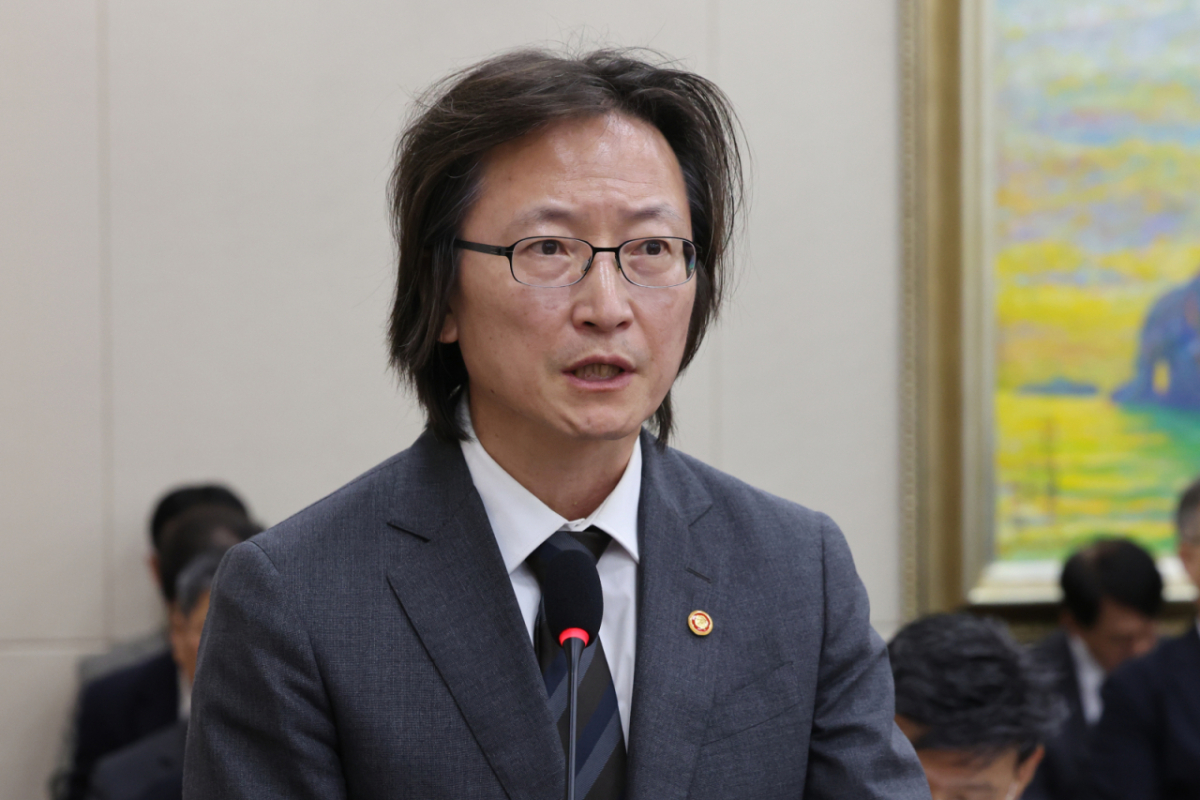
Joo Byung-ki Gong Jeong-geo-rae (Chairman) recently stated, "We are preparing to file a (criminal) complaint," in connection with the Korea Fair Trade Commission's failed on-site investigation due to Coupang's refusal to cooperate.
On that day, during the economic department-specific review by the National Assembly Budget and Accounts Special Committee, Joo Byung-ki Joo (Chairman) responded to a question from Song Jae-bong of the Democratic Party of Korea, who characterized the incident as an "attempt to neutralize South Korea's public authority," by saying, "We are preparing to respond thoroughly," and added this statement.
Previously, the Korea Fair Trade Commission launched an on-site investigation to verify allegations that Coupang violated the Large-Scale Retail Business Act but withdrew after Coupang refused to cooperate with the investigation.
Specifically, the Korea Fair Trade Commission conducted an on-site inspection at Coupang's headquarters to investigate suspicions that Coupang improperly shifted the costs of "price-customized coupons" onto its suppliers. Price-customized coupons are a system in which if the price of a specific product sold by Coupang is higher than those on competing shopping malls such as Naver, a coupon is automatically issued to lower the actual payment amount for consumers to the lowest price level.
However, Coupang refused the investigation on the grounds that it had not been notified in advance of the investigation from the Korea Fair Trade Commission. It cited provisions of the Administrative Investigation Basic Act, which stipulates that when an administrative institution conducts an on-site investigation, it must notify the target of the investigation in writing at least seven days prior to the start of the investigation.
The Administrative Investigation Basic Act, enacted in 2007, excludes cases involving violations of eight laws under the jurisdiction of the Korea Fair Trade Commission, including the Fair Trade Act, the Subcontracting Act, and the Franchise Business Act, from the requirement for prior notification. The Large-Scale Retail Business Act, enacted in 2011, is generally subject to prior notification requirements.
The Korea Fair Trade Commission maintains that even if the Large-Scale Retail Business Act requires prior notification, this particular investigation falls under an exception. Article 17 of the Administrative Investigation Basic Act allows for oral notification of the purpose and timing of the investigation at the time of its commencement when it is determined that the purpose of the investigation cannot be achieved due to destruction of evidence or similar reasons. The commission's position is that whether there is a risk of evidence destruction is a matter for the investigating administrative institution to decide, not something that can be claimed by the company under investigation.
Since securing electronic data such as messages and emails, which are easily deleted, is key to on-site investigations by the Korea Fair Trade Commission, the commission has generally conducted such investigations without prior notification.
While there have been cases where companies under investigation refused to submit documents or otherwise failed to cooperate during the investigation process, it is rare for a company to challenge the application of the law itself and refuse the investigation, according to officials.
Joo Byung-ki Joo (Chairman) said, "An unprecedented situation has occurred, so we are preparing to respond thoroughly," and added, "Since they filed a lawsuit by exploiting loopholes in the law, we have no choice but to respond to the lawsuit."

 in ECONOMY
