

The background of fairness controversies surrounding the Fair Trade Commission lies in the structural problem of the Korea Fair Trade Commission, which holds both investigation and adjudication functions. Critics argue that this creates an uneven playing field where the same body acts as both investigator and judge. In response, there are calls to establish a third-party independent institutional investor so that judgments can be made by an impartial entity.
According to government and industry sources on the 16th, the Korea Fair Trade Commission is facing criticism for going beyond establishing market order and instead tightening its grip on companies through 'severe administrative action,' driven by comprehensive investigations this year and significantly increased fine levels. Fines amounting to hundreds of billions of won have become a 'new normal,' including 408.3 billion won in the sugar cartel case and 671 billion won in the flour cartel case.
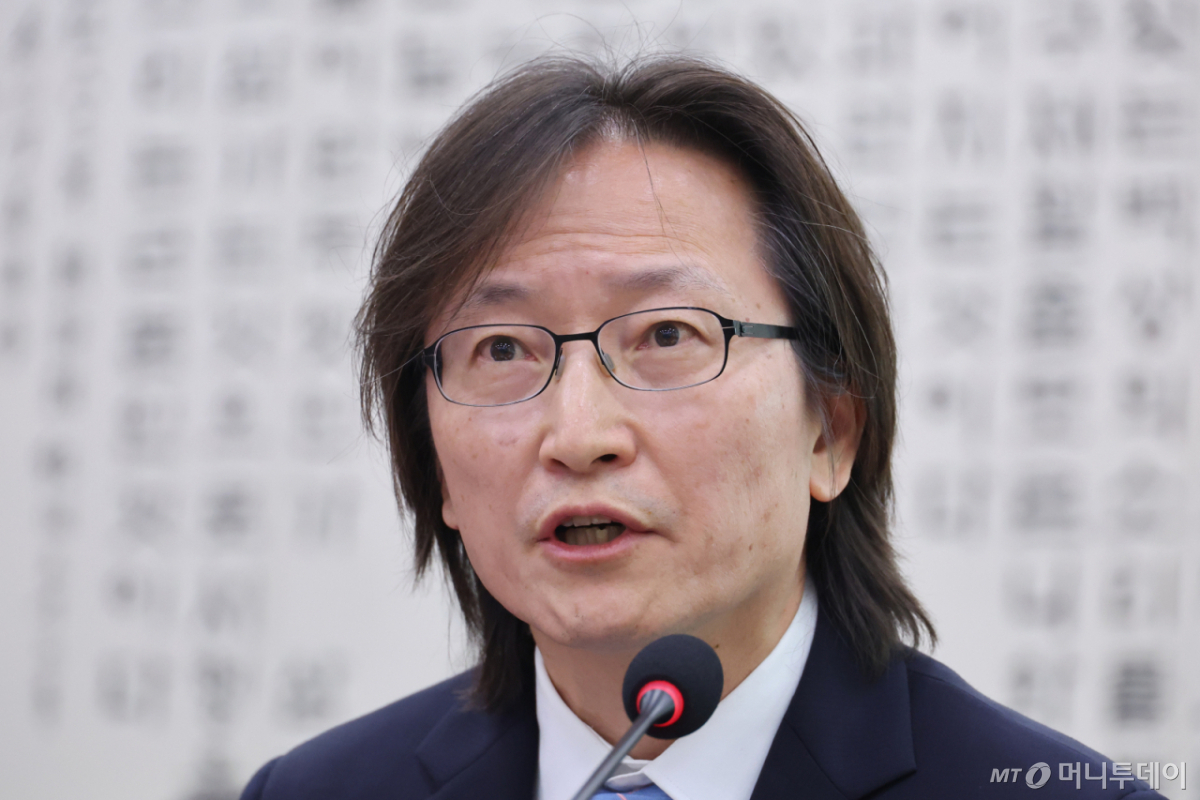
Both inside and outside the industry, complaints are being raised that the structure itself—where investigation and adjudication occur internally—is unreasonable. Lee Hwang, a law professor at Korea University, stated, "The Fair Trade Commission has a dual nature." He added, "Academic circles view the quasi-judicial institutional investor character as its essence. While separating investigation and adjudication functions aligns with the principle of due process, it is true that although the Fair Trade Commission has made efforts for a long time, they have not been fully faithful to this goal."
In contrast, the Fair Trade Commission maintains that it has ensured fairness through strict separation of investigation and adjudication functions. In 2023, the Fair Trade Commission prohibited personnel transfers between investigation and adjudication departments, requiring them to go through policy departments instead. Policy departments are used as a buffer zone between investigation and adjudication units. Workspaces were also completely separated to eliminate any possibility of contact.
A Fair Trade Commission official stated, "The spaces for the departments handling adjudication and investigation are physically separated." He added, "Through a strong 'firewall,' information sharing is not even attempted, and there is a strong atmosphere where internal personnel find even direct contact uncomfortable." Another official remarked, "Since adjudication decisions are made through committee consensus, extensive debates occur during plenary meetings, and results do not always turn out as intended," dismissing concerns about the Fair Trade Commission's structure.
However, since investigation and adjudication remain under one roof, it appears difficult to quell fairness controversies. The fact that the Fair Trade Commission chairman, who can order investigations, also participates in the adjudication process raises doubts about a structural problem that relies on the chairman's conscience, lending weight to such opinions.
In response, suggestions are being made for an independent institutional investor similar to the Tax Tribunal, which operates separately from the National Tax Service. Hongdae Law School Association Lee (President) stated, "We strongly support establishing a third-party judgment procedure like the Tax Tribunal." He added, "It is desirable that adjudicators do not participate in the investigation stage by relying on the chairman's conscience; if doubts remain unresolved, structural separation would be appropriate."
However, there are also numerous counterarguments that this is not practically feasible. An official who previously served as a commissioner at the Fair Trade Commission explained, "If adjudication functions were entirely transferred externally, it would take even longer than now, and there is a risk that people with low understanding of competition law would make judgments." He further stated, "It is more reasonable to maintain independence by strictly separating investigation and adjudication functions within the organization."
Another proposal under discussion is improving the two-tier system for fair trade administrative cases to a three-tier system. Fair trade administrative cases currently follow a two-tier process through Seoul High Court to the Supreme Court. The Fair Trade Commission's decisions impose direct sanctions on businesses, such as corrective orders and fines. In effect, the Fair Trade Commission performs first-instance functions. While small-amount cases allow for three trials, in situations involving hundreds of billions of won changing hands, companies face fewer opportunities to seek legal judgments, which is why criticism arises that they have fewer chances to obtain legal determinations despite the high stakes.

 in ECONOMY
