

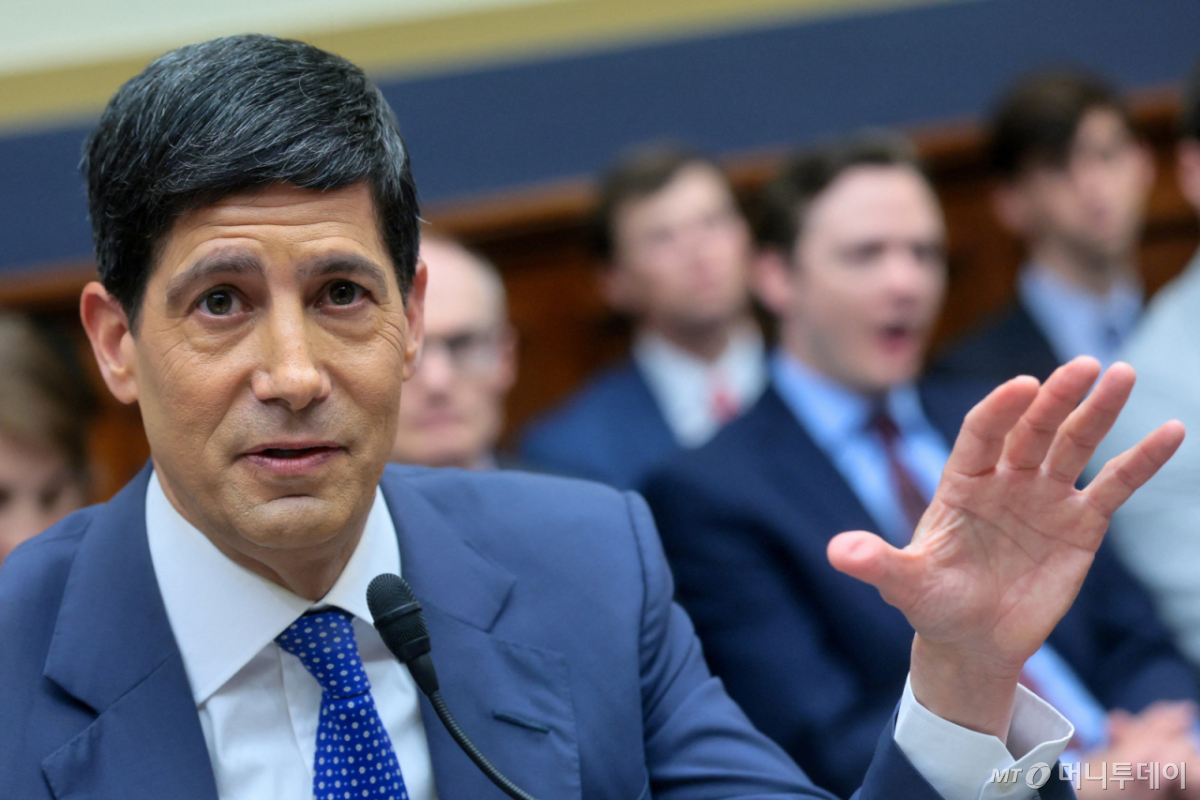
With the Federal Reserve (Fed·Federal Reserve System), which raised its base rate for the first time in three years and two months, now hinting at further rate hikes within the year, pressure on the Bank of Korea to raise rates again has intensified. This is because, amid rising inflation driven by high oil prices, additional tightening by the U.S. could expand upward pressure on exchange rates and import prices.
Kwon Min-soo, Deputy Governor of the Bank of Korea, stated at a market situation review meeting on the 17th that "given Chair Kevin Warsh's emphasis on his commitment to price stability and hints at further rate hikes, the Federal Reserve's monetary policy stance is expected to remain contractionary in the future."
On the 16th (local time), the Federal Reserve held its Federal Open Market Committee (FOMC) meeting and raised the target range for the base rate from 3.50–3.75% annually to 3.75–4.00%, an increase of 0.25 percentage points. This marks the first hike in three years and two months since July 2023, with all 12 voting committee members casting their votes in favor.
According to the Bank of Korea's New York office, market participants assessed this FOMC outcome as more hawkish than expected. The Federal Reserve emphasized a "faster return to its 2% inflation target" in its policy statement and raised forecasts for economic growth, inflation, and policy interest rates across the board.
The median projection for the Federal Reserve's year-end policy rate rose from 3.8% to 4.1%. Among the 18th members who submitted dot plots, 12 anticipated one additional rate hike within the year, while four expected two more hikes. Chair Warsh also recently noted that inflation trends have not meaningfully improved and that current financial conditions cannot be considered accommodative.
With the Federal Reserve resuming its tightening cycle, it has become difficult for the Bank of Korea to slow down its pace of rate hikes. The Bank of Korea raised its base rate by 0.25 percentage points consecutively in July and August, bringing the current policy rate to 3.00% annually. Following this Federal Reserve hike, the interest rate gap between South Korea and the U.S. has widened again from a maximum of 0.75 percentage points to 1.00 percentage point at the upper end.
Due to the U.S. rate hike, pressure for a stronger dollar increased, and the won/dollar exchange rate closed the week's trading at 1,382.2 won, up 13.6 won from the previous trading day. With international oil prices exceeding $100 per barrel, combined with a weakening won, upward pressure on domestic inflation through higher import prices could intensify.
Consumer price inflation rebounded to 3.1% last month, while growth in housing prices and household loans in the capital region continues to expand. In the Bank of Korea Monetary Policy Board's conditional rate outlook for six months ahead, 16 out of 21 total projections pointed to higher rates than current levels.
However, it remains uncertain whether the Monetary Policy Board will implement a third consecutive base rate hike at its next meeting on the 22nd of next month. This is because the effects of the cumulative 0.50 percentage point increase over two months need to be assessed, and risks such as increased interest burdens for vulnerable borrowers and rising delinquency rates must also be considered.
The timing of any additional rate hike will likely depend on how strongly the Federal Reserve's tightening transmits to domestic exchange rates, inflation, and financial imbalances. If exchange rates and prices continue to rise and housing prices in the capital region along with household loan growth remain unchecked, the likelihood of an additional rate hike next month increases. Conversely, if it is judged that more time is needed to observe the effects of consecutive hikes, the Bank of Korea may hold rates steady next month and decide on a November increase afterward.

 in ECONOMY
