

The artificial intelligence (AI) supercycle continues to support Korea-origin air cargo rates even amid global freight rate adjustments. While global air cargo freight indices have fallen for five consecutive weeks, spot rates from Korea to the U.S. rebounded by approximately 5% over the past week. Korean Air is expanding cargo handling capacity at its Incheon and New York cargo terminals to meet high-value AI-related demand, including semiconductors, server racks, and transformers for data centers.
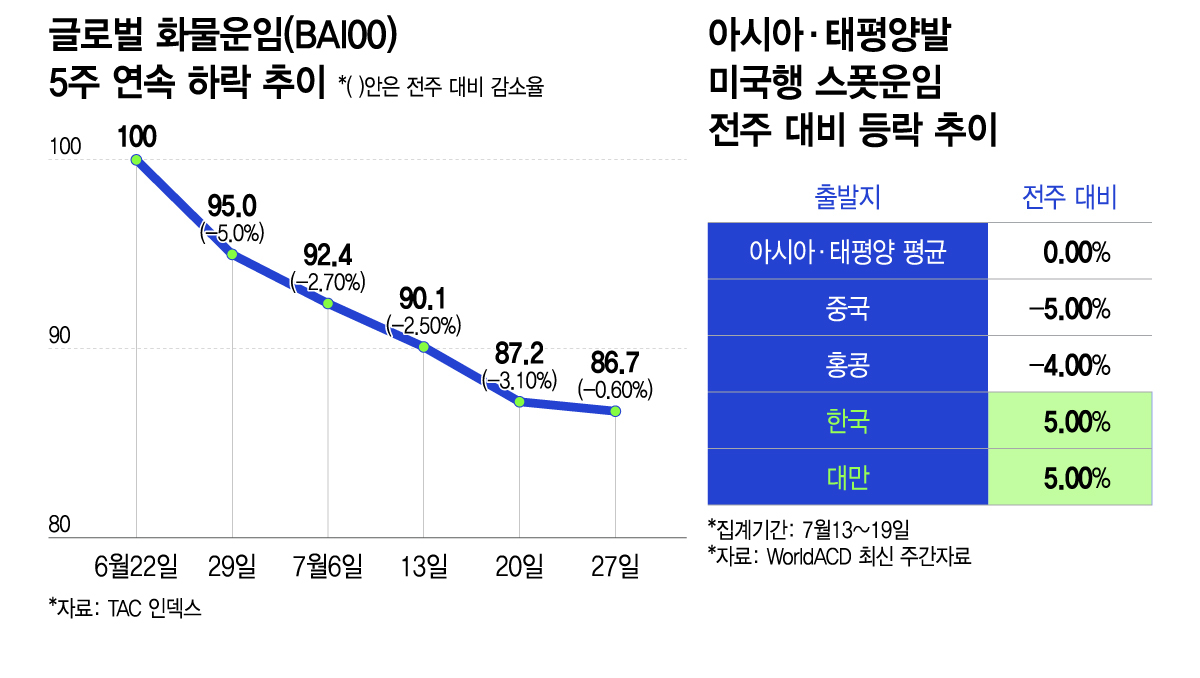
According to TAC Index data released on the 30th, the Baltic Air Freight Index (BAI00), which reflects global air cargo freight rates, closed at 2,393 on the 27th, down 0.6% from Jeonju and marking five consecutive weeks of decline. Latest weekly data published by WorldACD on the 27th also showed that global average freight rates fell 1% from Jeonju to $3 per kilogram.
Average spot rates from Asia-Pacific Pyongyang to the U.S. during the 13th–19 stood at $6.61 per kilogram, maintaining levels similar to Jeonju. Trends varied by departure point. Freight rates from China and Hong Kong to the U.S. fell 5% and 4%, respectively, compared to Jeonju, while those from Korea and Taiwan both rose by 5%. Although overall Asia-Pacific Pyongyang freight rates remained flat, rates from Korea and Taiwan—countries with high shares of semiconductor and advanced electronic component exports—rebounded, highlighting differentiation based on key cargo types.
The resilience of Korea-origin freight rates is also evident in monthly indicators. According to the Korea Chamber of Commerce and Industry, reference freight rates for 100-kilogram cargo from Incheon to North America in July were 22,763.5 won per kilogram, representing only a 1.6% decline from June's peak. Compared to global freight rates undergoing adjustments for nearly a month, the drop remains limited.
Industry sources cite expanded AI infrastructure investment as the backdrop supporting Korea-origin freight rates. As construction of AI data centers increases, demand for transporting large and heavy cargo—including not only semiconductors but also server racks and power supply transformers—is rising. These items carry significant penalties if delivery delays disrupt data center construction or operational schedules, making air transport more attractive than sea freight due to the potential losses exceeding air shipping costs.
A Korean Air representative stated, "The AI supercycle and repercussions from the Middle East situation are working in tandem," adding, "With continued demand for high-value cargo, some urgent shipments previously transported by sea have shifted to air."
High-value cargo demand is also reflected in Korean Air's financial performance. Cargo division revenue for the second quarter of this year reached 1.5419 trillion won, a 46.1% increase compared to the same period last year. Korean Air attributed the revenue growth to attracting high-value cargo aligned with global AI investment and expanded K-beauty exports, as well as deploying irregular flights on routes with strong demand. During a recent conference call, the company noted that "AI-related demand shows no signs of declining" and forecasted continued strength in the cargo market through year-end.
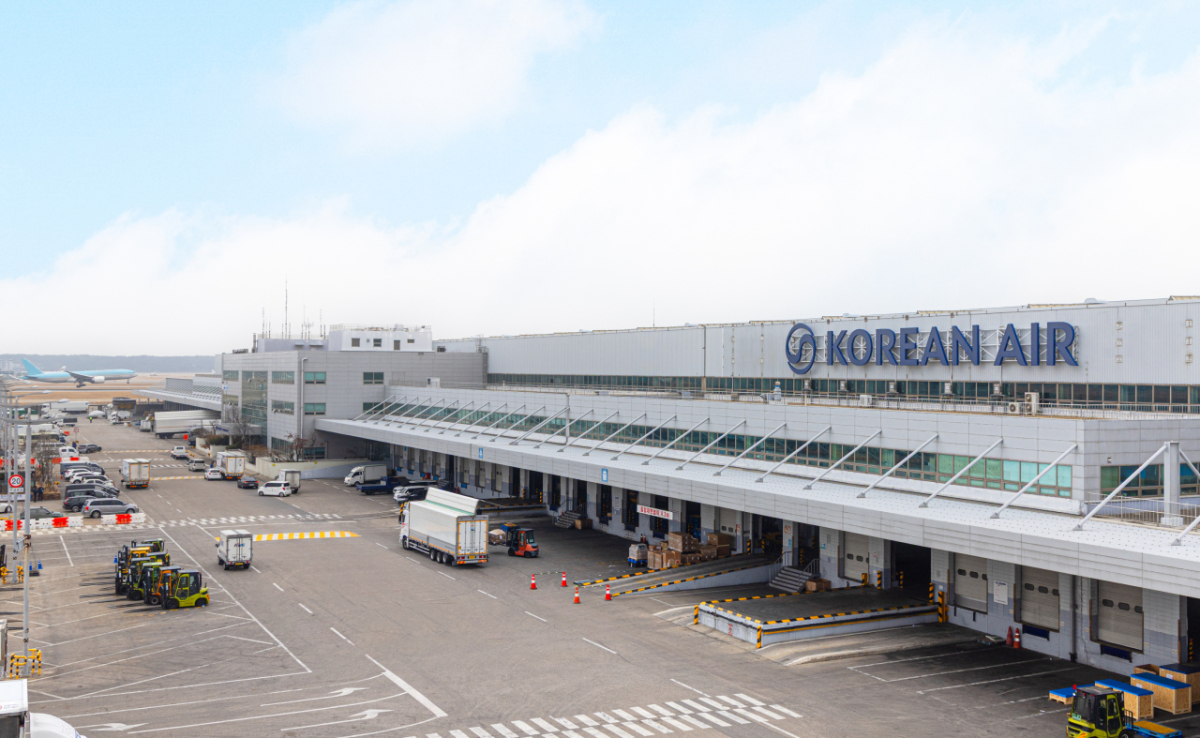
To handle growing AI cargo demand, Korean Air is simultaneously expanding its cargo hubs in Korea and the U.S. Through modernization of the Incheon Cargo Terminal currently underway with completion targeted for September, the airline plans to expand unmanned automated equipment and increase annual cargo handling capacity by approximately 25% over current levels. Automated facilities will accelerate cargo processing while reducing workers' exposure to risks.
In the U.S., modernization of the New York Cargo Terminal began in June, with completion targeted for July 2027. The project includes introducing the latest unmanned automated systems and constructing or retrofitting refrigerated and frozen warehouses to attract more high-value special cargo such as pharmaceuticals. This strategy aims to rapidly process advanced industrial cargo departing from Korea while securing high-value cargo on return flights.
The online sales network is also being strengthened. Korean Air provides real-time freight rate inquiries, flight schedule checks, and instant booking services through its air cargo reservation platform, 'WebCargo.' By connecting automated facilities at Incheon and New York terminals with online reservations, the airline aims to shorten the time from cargo acceptance to transportation.

 in INDUSTRY

