

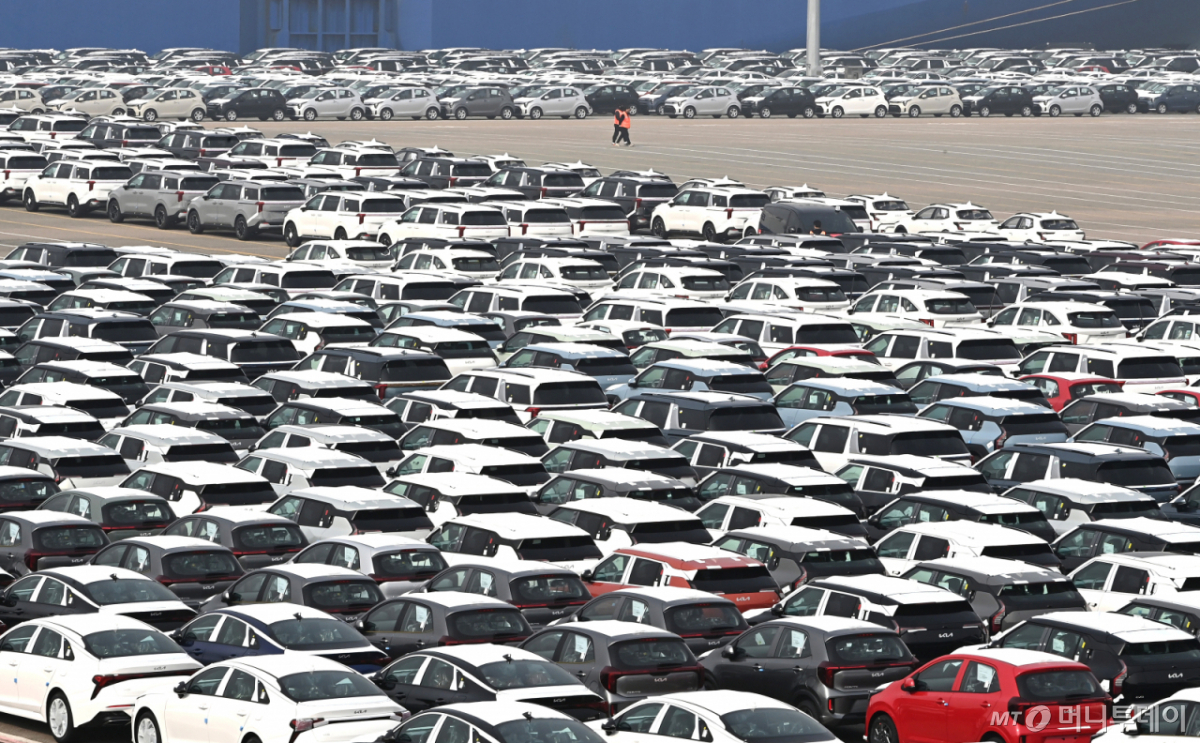
With electric vehicles removed from the scope of the domestic production tax credit, the finished vehicle industry is expressing bewilderment. Critics point out that as the offensive of low-priced Chinese electric vehicles intensifies, the removal of support at the finished vehicle stage could undermine the foundation for domestic production.
According to relevant industry sources on the 3rd, domestic automakers have long demanded that electric vehicles be included in the scope of the domestic production tax credit. The reason is that competitiveness in parts such as batteries alone is insufficient to compete on price in finished vehicle markets. While the government maintains that supporting key components like secondary batteries will enhance overall finished vehicle competitiveness, there is a gap between this stance and on-the-ground assessments. There is a significant time lag before component support translates into lower finished vehicle costs, and there is no guarantee that such support will directly lead to an expansion of domestic production volumes.
An industry executive stated, "With the reality of aggressive low-priced Chinese electric vehicles now in play, excluding finished vehicles from the tax credit would effectively eliminate the momentum for selling eco-friendly vehicles domestically." The executive urged, "Since support limited to components has clear limits in preserving the foundation for domestic electric vehicle production and sales, further review is necessary."
As the electric vehicle market continues to expand rapidly, the intensity of feeling this support gap is expected to grow. According to the Korea Automotive Mobility Industry Association (KAMA), domestic car sales reached 851,000 units in the first half of this year, a 1.3% increase compared to the same period last year. Among these, electric vehicle sales surged by 113.6% to 198,509 units. The share of electric vehicles in the domestic market rose from 11.1% in the first half of last year to 23.3% this year—more than doubling. When including HYBE Ride vehicles and hydrogen fuel cell cars, the share of eco-friendly vehicles increased from 46.1% to 57.8%. In other words, six out of every ten cars sold in Korea were eco-friendly.
However, it appears that imported brands are capturing a larger share of the benefits from market expansion. Domestic car sales fell by 4.8% to 658,000 units in the first half, hampered by supply disruptions due to fires at parts manufacturers. In contrast, imports rose by 30% to 193,000 units, buoyed by strong performance from electric vehicle brands such as Tesla and BYD.
Furthermore, a structural issue has compounded the situation: the more vehicles are produced domestically for export, the greater the burden becomes due to U.S. tariffs. Industry voices argue that domestic producers face pressure from imported electric vehicles at home while simultaneously bearing tariff costs abroad, necessitating incentives to maintain domestic production. This frustration stems from the perception that current policies fail to adequately reflect industrial realities.
Instead, the government has decided to adjust the limit for depreciation deductions on business-use passenger cars. Under this measure, annual deduction limits will rise to 10 million won for electric and hydrogen vehicles but fall to 7 million won for internal combustion engine vehicles. While this is intended to boost demand for eco-friendly vehicles, concerns arise that a significant portion of the benefits may flow to foreign brands given the recent surge in imported electric vehicle sales.

 in INDUSTRY
