

LG Chem reported an operating profit nearing 600 billion won in the second quarter of this year, buoyed by a recovery in profitability in its petrochemical business. Petrochemicals accounted for 71% of total operating profit, leading the turnaround. Looking ahead to the second half of the year, momentum is expected to accelerate as the company expands its future growth businesses, including cathode materials, separators, and semiconductor and mobility materials.
LG Chem announced on the 31st that consolidated sales for the second quarter reached 14.1759 trillion won, with an operating profit of 599.6 billion won. Sales increased by 19.0% year-on-year, while operating profit rose by 25.8%. Compared to the previous quarter, sales grew by 15.8%, and the company returned to profitability in terms of operating profit. Net income also turned positive at 67 billion won, marking a return to profit after three quarters.
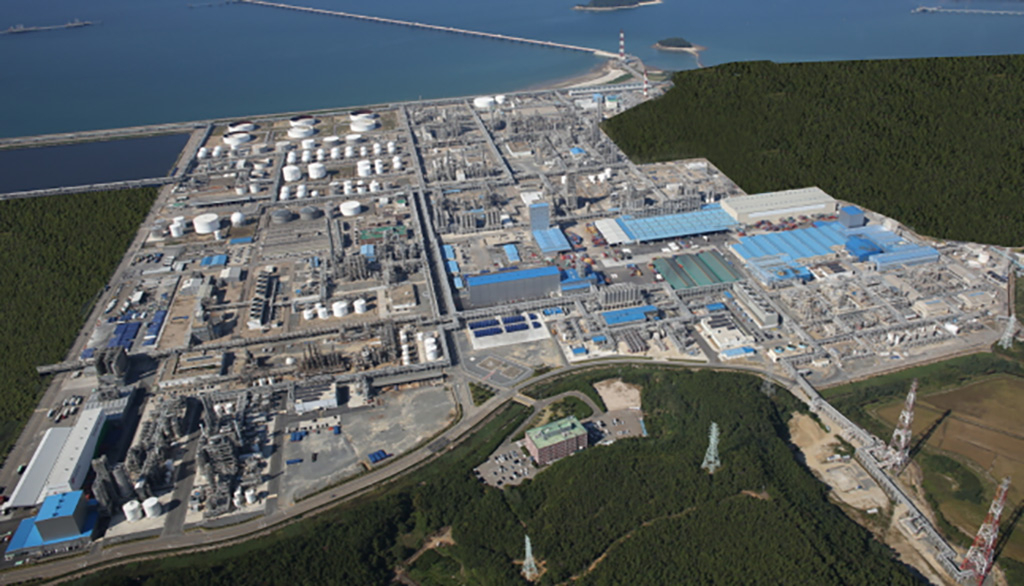
In the petrochemical segment, which led the performance improvement, LG Chem recorded sales of 5.3289 trillion won and an operating profit of 426.5 billion won, representing 71% of total consolidated operating profit. Despite a drop in utilization rates to the mid-50% range following the suspension of operations at Unit 2 of the Yeosu Naphtha Cracking Complex (NCC) in March, profitability improved due to positive inventory lag effects from rising raw material prices, expansion of spreads (margins), and one-time benefits from U.S. reciprocal tariff refunds.
In the second half of the year, rising logistics costs and volatility in raw material prices are expected to weigh on profitability. Yang Cheol-ho, head of LG Chem's Petrochemical Management Strategy Group, stated, "Ocean freight rates have risen by approximately 60% compared to the first half, and with growing uncertainty over war in July, daily fluctuations in raw material prices have also widened." He added, "Recently, while raw material prices have increased, product prices have not kept pace. This may be due to customers delaying purchases amid weak or uncertain demand. We view this as a key risk to manage in the second half."
LG Chem aims to secure final government approval for its petrochemical business restructuring by the end of this year. While discussions with partner companies on detailed terms are ongoing, the company notes that both sides have complex business portfolios, resulting in numerous issues to address. Even if structural reorganization receives government approval within the year, significant time will likely be required to complete follow-up procedures related to asset spin-offs and domestic and foreign merger approvals.
The advanced materials segment also contributed to the performance rebound by returning to profitability in just two quarters, recording sales of 999 billion won and an operating profit of 19.9 billion won. This segment operates in electronic materials, battery materials such as cathode materials and separators, and engineering materials businesses. Rising prices for cathode materials and increased shipments of separators boosted battery material sales, while the full-scale launch of new electronic material products like Yangsan improved profitability.
Growth is expected to continue in the second half of the year, centered on cathode materials and separators. Lee Young-seok, head of LG Chem's Advanced Materials Management Strategy Division, said, "We plan to expand supply to new customers and increase volumes for LG Energy Solution in the second half. The volume increase will be larger in the fourth quarter than in the third." However, with the recovery of the North American electric vehicle market proceeding more slowly than initially expected at the beginning of the year, meeting this year's cathode material volume targets appears challenging. Executive Vice President Lee added, "In 2027, volume increases from new projects starting in the second half of this year will be reflected annually, enabling significant volume growth compared to this year."
LG Chem is also gradually commercializing next-generation cathode material product lines. The upgraded 2170 cylindrical cathode materials will begin supply in the third quarter and contribute to revenue from the fourth quarter. Development cooperation with customers for next-generation 46-series cathode materials is underway, with Yangsan targeted for 2028. Development and economic feasibility reviews are also being conducted in parallel for lithium manganese-rich (LMR) and lithium iron phosphate (LFP) cathode materials, targeting Yangsan after 2028. Sodium-ion batteries are expected to see high-power products reach Yangsan by the end of next year, while long-life and high-capacity products could begin full-scale commercialization from 2029 onward.
The separator business is also expected to grow by approximately 40% compared to last year this year. In particular, volumes for energy storage systems (ESS) are projected to increase significantly in the second half of the year, accounting for 60–70% of total annual sales. With global power infrastructure investments and expansion of artificial intelligence (AI) data centers expected to drive demand next year, separator sales are forecast to grow substantially compared to this year.
In another pillar of advanced materials—electronic and mobility materials—LG Chem is expanding its customer base and product lines. For chip carrier laminates (CCL) used in semiconductors, the company has broadened application areas beyond memory-focused products to non-memory sectors, securing three global customers this year and supplying products. Evaluations are also underway for CCLs used in substrates (FC-BGA) and glass through-via (TGV) glass for glass substrates, which will be developed into core businesses. Adhesive materials for semiconductors are also expanding their product lines to include thermal management and insulating functional adhesive films aligned with next-generation packaging technologies.
In mobility materials, LG Chem has begun supplying light-control films to European original equipment manufacturers (OEMs). The company is also broadening its product lineup to include films for next-generation head-up displays (HUDs). Thermal management adhesives for vehicle electronics are being developed with new customers, including U.S.-based OEMs, and early signs of success have been observed.
Performance improvements in the life sciences segment and its subsidiaries, which recorded sales of 369 billion won and an operating profit of 60 billion won, are also notable. Hanwha O&C reported sales of 274.1 billion won and an operating profit of 25.4 billion won, while Energy Solution posted sales of 7.5602 trillion won and an operating profit of 113.3 billion won. The company returned to profitability due to robust demand for cylindrical and pouch batteries for electric vehicles, increased shipments driven by expanded ESS production capacity in North America, and reduced fixed costs.
Cha Dong-seok, LG Chem's Chief Financial Officer (CFO), stated, "We plan to review the optimal approach annually and proceed with divestment of our stake in LG Energy Solution, aiming to reduce it to approximately 7% by 2030." He added, "To accelerate our transformation into a converting company based on technological competitiveness, we are formulating detailed strategies for high-value businesses with strong profitability. If we choose to invest in or spin off local companies, utilizing the proceeds from divestment will also be an option."

 in INDUSTRY
