

Since the 2022 LegoLand crisis, real estate project financing (PF), which had contracted due to restructuring, is resurging as a revenue source for the investment banking (IB) division of securities firms. Real estate project financing refers to raising funds based on the performance of development projects such as apartments and offices, along with future revenues expected to be generated. The PF sector has been analyzed to see new capital flowing in primarily toward projects with sound business viability following restructuring.
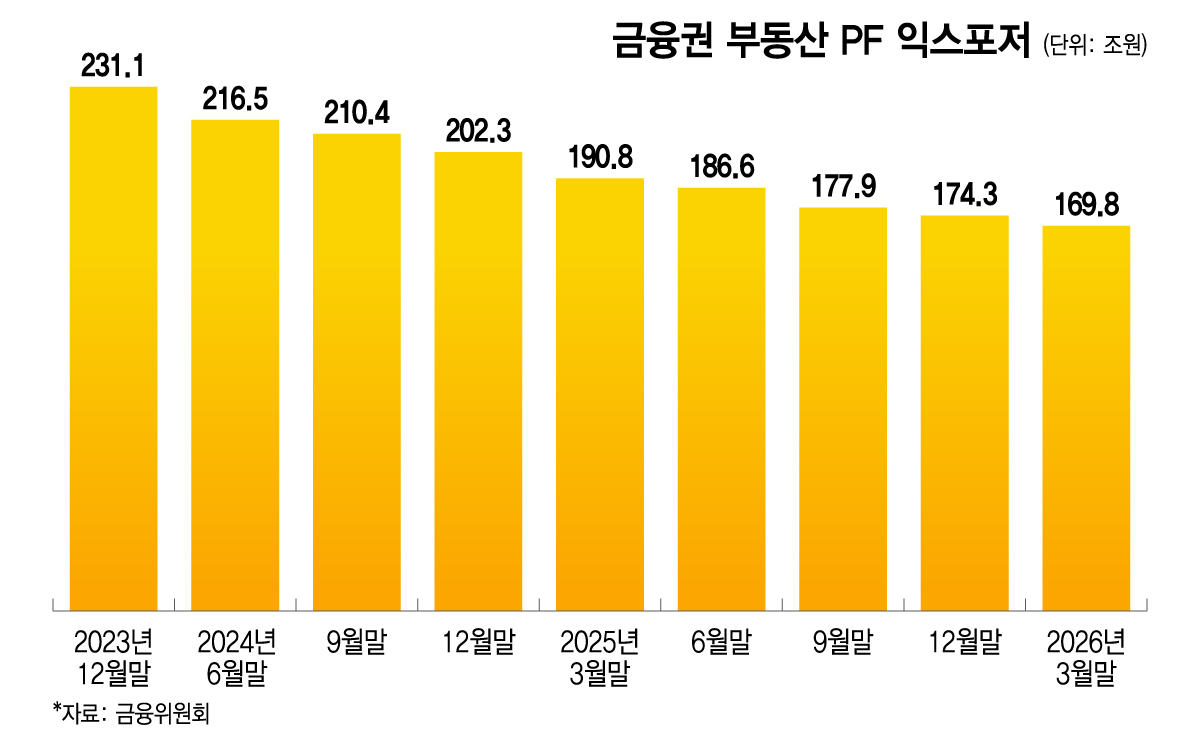
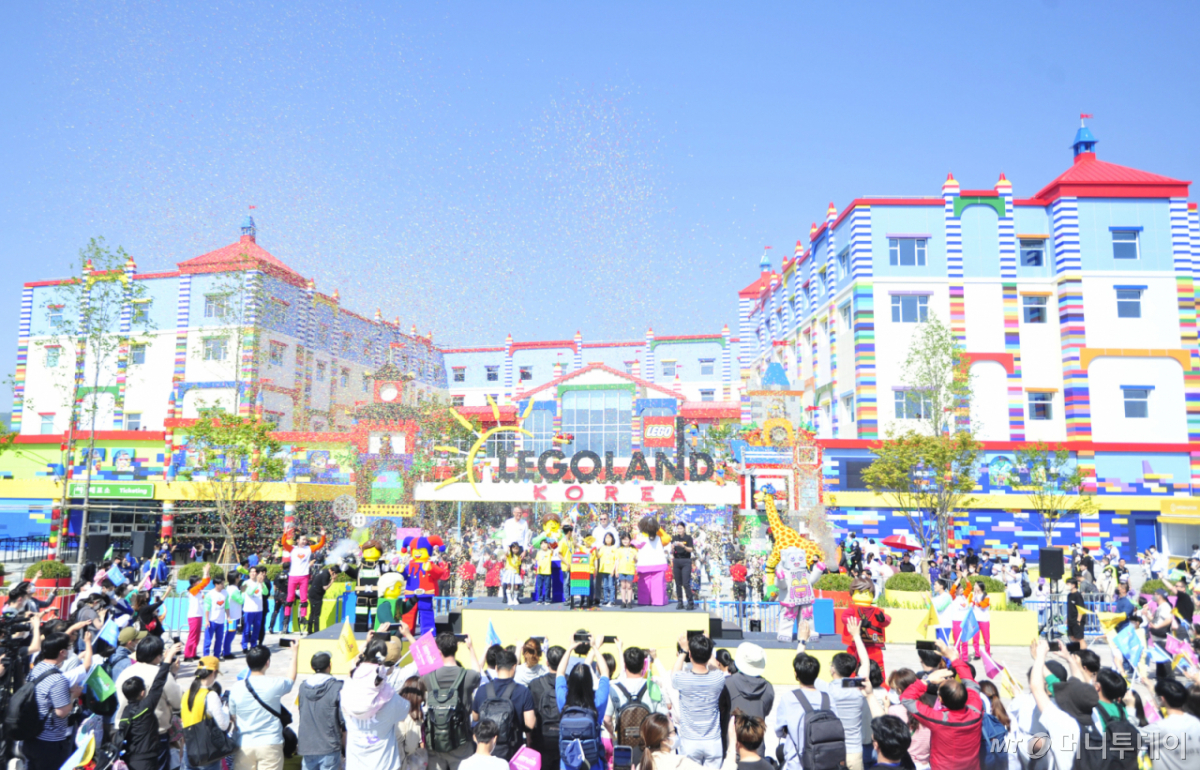
According to data released by the Financial Services Commission on the 23rd, the financial sector's real estate project financing exposure (risk exposure amount) stood at 169.8 trillion won as of the end of March this year, a 26.5% decrease compared to the end of December 2023, the year following the LegoLand crisis. This decline resulted from the completion of projects and the cleanup and restructuring of those with insolvency concerns. As of the end of March this year, the scale of projects that have undergone cleanup or restructuring amounts to 18.9 trillion won. The LegoLand crisis was an event in which market instability spread after Gangwon Province announced in 2022 that it would pursue bankruptcy proceedings instead of fulfilling payment guarantees for a 205 billion won asset-backed commercial paper (ABCP) issued by Gangwon Mid-Development Corporation, the developer of the LegoLand project.
However, new real estate project financing handled in the first quarter of this year reached 16.8 trillion won, a 50% increase compared to the same period last year. Financial authorities analyzed that new capital is being supplied primarily toward projects with sound business viability and high progress rates.
New capital inflows in the real estate project financing sector are expected to contribute to increasing or maintaining the performance of securities firms' IB divisions. Daishin Securities reported that its IB and PF revenue for the first half of this year reached 129 billion won, a rise of approximately 74% compared to the same period last year. While acquisition and underwriting fees from IPOs (initial public offerings) and other activities fell by more than 30%, financial advisory fees and payment guarantee fees increased by 342% and 29%, respectively, in the second quarter. Payment guarantee fees are commissions received by securities firms for providing debt guarantees on loans or securitized products related to real estate development projects. Payment guarantees are considered a key link in real estate project financing fund raising.
Kiwoom Securities reported that its IB fees for the second quarter reached 83.3 billion won, a 56% increase from the first quarter. Of this amount, structured finance and PF fees accounted for 65.8 billion won, representing 79.0%. New PF projects, including the joint residential development project on the former Homeplus site in Sangdong, as well as refinancing of acquisition financing, contributed to the results.
Until before the LegoLand crisis, underwriting and guarantee fees related to real estate project financing were a pillar of IB performance alongside acquisition and underwriting fees. However, following the emergence of insolvency issues, securities firms have reduced new handling and focused on managing existing exposures. It is expected that as restructuring progresses and capital begins to flow primarily toward high-quality projects, it will help improve the profitability of securities firms. An executive in the IB industry stated, "Real estate has been considered a major revenue source for the IB division until before the LegoLand crisis," adding, "There has long been a view among large institutional investors that real estate project financing is stable."
However, there are also views within the IB industry that an increase in PF handling could lead to a simultaneous rise in insolvency risks. The delinquency rate for securities firms' PF loans rose from 28.38% at the end of last year to 30.43% as of the end of March this year, an increase of 2.05 percentage points.
The the 13th real estate measures announced by the government, which focus on supplying approximately 230,000 housing units in the Seoul metropolitan area, are also discussed as a potential issue for increasing construction bond underwriting volumes in securities firms' IB divisions. If external borrowing by public institutional investors related to real estate development increases, capital market financing through instruments such as construction bonds and MBS (mortgage-backed securities) could expand, potentially increasing opportunities for securities firms in underwriting. However, this scenario could also lead to intensified low-fee competition. Kim Sang-in, a researcher at Shinhan Investment Corp., stated, "There is expectation for the normalization of the previously contracted PF market, and it is anticipated that the roles of Korea Land and Housing Corporation (LH), Korea Housing Finance Corporation (Kamco), HUG (Housing Guarantee Fund), and KAMCO (Korea Asset Management Corporation) will be strengthened," adding, "There is a possibility that external borrowing by these institutional investors may increase."

 in STOCK

