

"The AI factory we are jointly developing with NVIDIA is not a one-time investment but an entry into a structurally growing business."
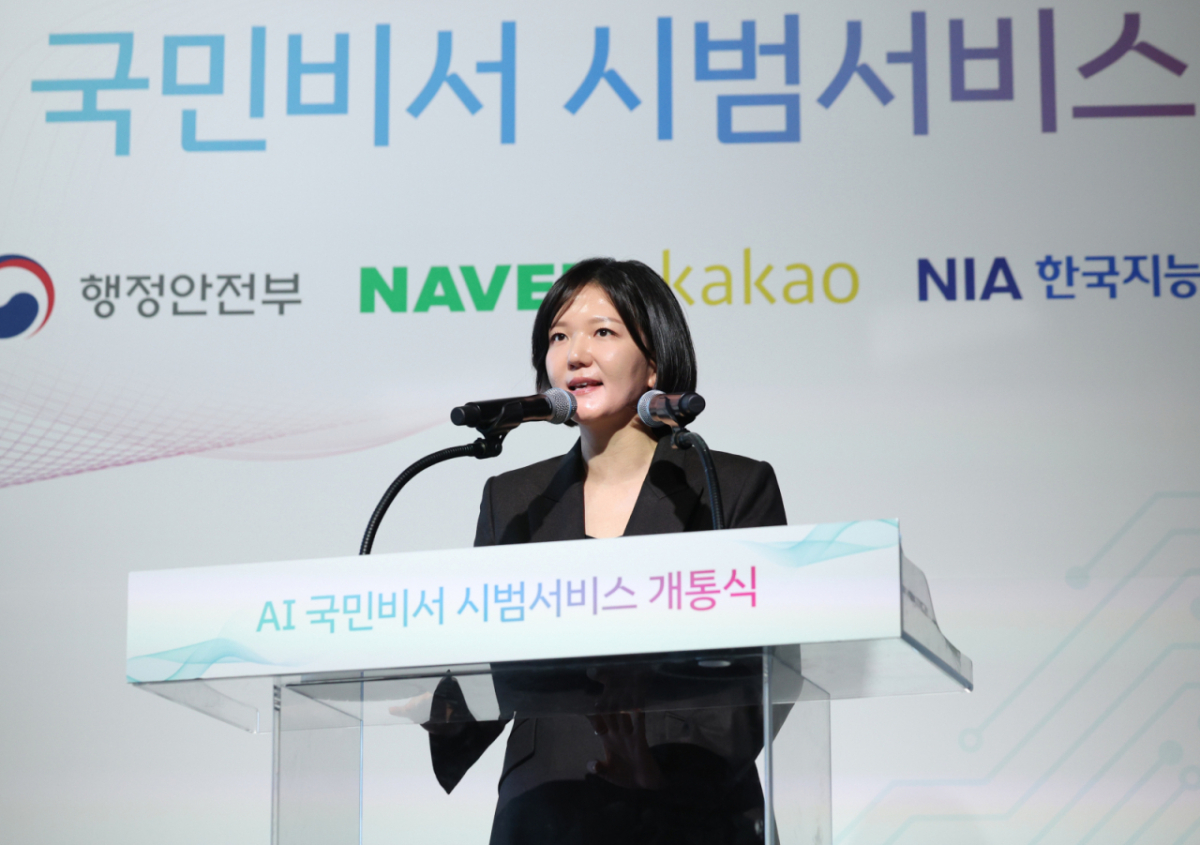
Naver CEO Choi Soo-yeon made these remarks during the Q2 earnings conference call on the 7th. Choi (CEO) stated, "AI factory revenue will begin in the first half of 2027 with an initial capacity of 55 megawatts (MW). Our ultimate goal is to achieve a gigawatt-scale infrastructure by expanding stepwise to 100 MW by the end of 2027 and 200 MW in 2028."
Choi (CEO) also presented an analysis that the AI infrastructure business will continue to grow. He said, "Global AI computing demand will keep rising due to the spread of generative AI, industry-wide AI transformation (AX), and AI agents. Although there are concerns that usage may decline with the emergence of low-cost, high-efficiency models, lower unit computation costs will instead drive the expansion of AX and AI agents, thereby boosting overall computational demand."
Naver also highlighted its strength as a "prepared operator." Choi (CEO) said, "Companies just starting to break ground on data centers are facing bottlenecks due to labor shortages, power supply constraints, semiconductor shortages, and opposition from local communities. In contrast, we already possess NVIDIA collaboration, prepared power and land resources, and full-stack operational capabilities."
Naver expects a 20% margin rate from the AI factory in the medium to long term. Kim Hee-cheol, Naver's Chief Financial Officer (CFO), stated, "The margin rate for AI factory operating companies is expected to reach at least double digits in the medium to long term." The AI factory operates under a structure where an operating company (OpCo), which is 100% owned by Naver, captures all revenues, costs, and margins. Brookfield, a financial investor (FI), will earn margins during the acquisition of computing assets through a special purpose vehicle (SPV) in which it invests up to $9 billion (approximately 12.7845 trillion won).
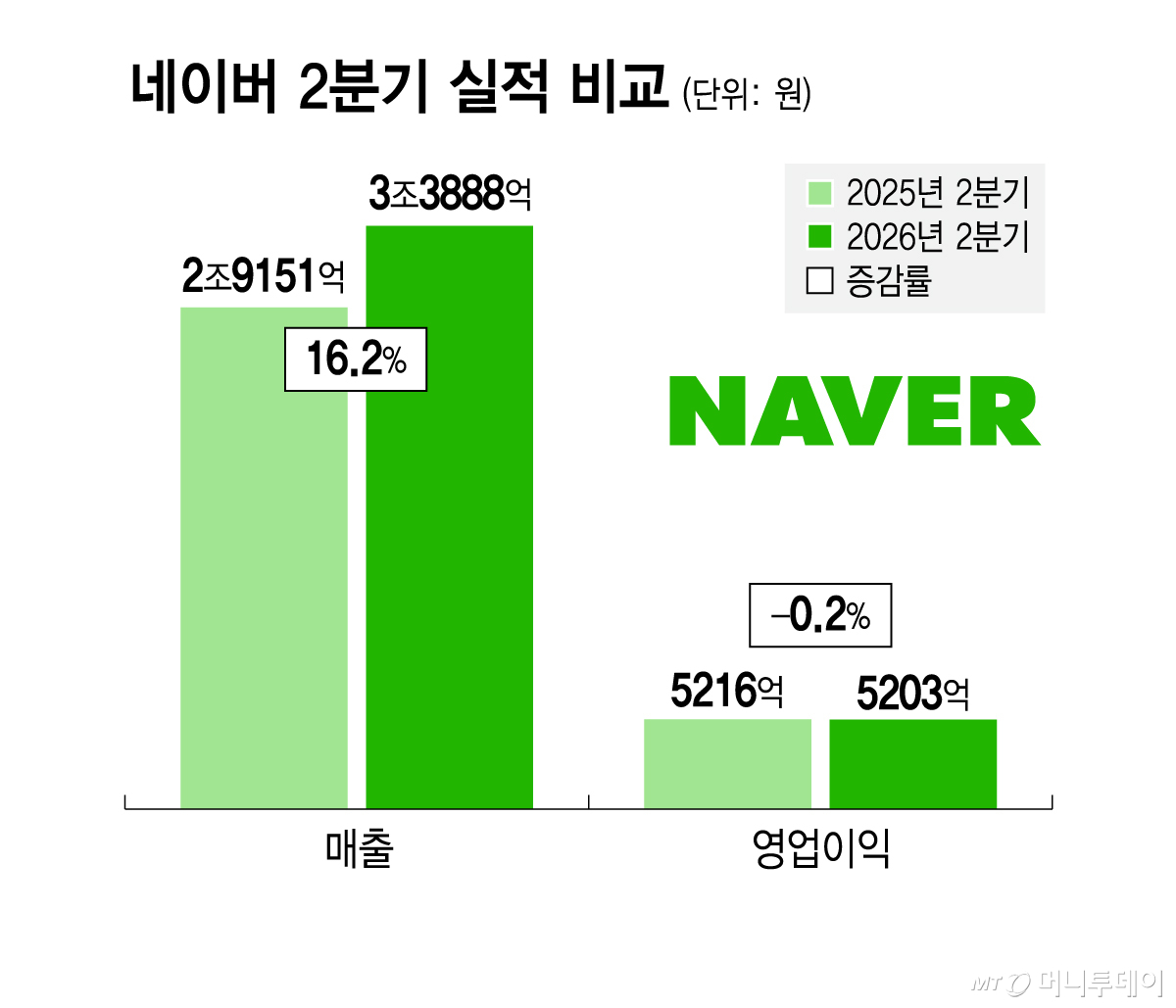
Choi (CEO) made these remarks to dispel concerns about overinvestment in AI infrastructure. Although Naver reported revenue of 3.3888 trillion won for the second quarter this year, a 16.2% increase from the same period last year, its operating profit fell by 0.2% to 520.3 billion won during the same period due to massive investments in AI infrastructure.
Additionally, Naver extended the depreciation period for GPUs (graphics processing units) from five years to six years, delaying annual cost recognition of approximately 100 billion won. This means the actual cash outflow remains unchanged, but billing is spread over a longer period. The decision was made because the AI infrastructure business requires significant initial investment and takes time to generate revenue. CFO Kim explained, "Long-term data analysis showed that the actual average usage period exceeds the depreciation period, so we reflected this in our calculations."
Until the recovery of AI infrastructure investments, Naver plans to rely on commerce and AI services as key pillars to support its performance. Choi (CEO) stated, "We aim to secure the number one position in combined online-offline B2C (business-to-consumer) payment volume by next year. Our goal is to expand offline payment volume based on Naver IDs to 130 trillion won within five years."
The AI briefing ad, officially launched at the end of July, has a cost per click that is over 30% higher than existing ads. Click-through rates (CTR) and purchase conversion rates have improved by more than 30% and three times, respectively. The AI tab, officially launched on June 25, surpassed 10 million monthly active users (MAU) in early August. Weekly return rates also increased by more than double compared to the initial testing phase. Choi (CEO) said, "AI briefing ads will serve as a growth driver for expanding transaction volume within Naver's platform, which is Korea's only platform connecting search, shopping, Places, and payments."
In response to concerns that the corporate combination with Duanmu might strain cash flow, Kim Hee-cheol, Naver's CFO, replied, "We believe the combination with Duanmu will be a positive factor for cash flow because we can utilize Duanmu's cash assets from a consolidated perspective." Naver has been pursuing a corporate combination with Duanmu since November last year. The plan involves incorporating Duanmu into Naver Financial, a Naver subsidiary. Once the merger is completed, Duanmu will become a grandchild company of Naver. The merger schedule has been delayed twice and is now expected to be finalized by the end of the year. An extraordinary shareholders' meeting is scheduled for November 19, and the stock exchange date is set for December 31.

 in TECH

