

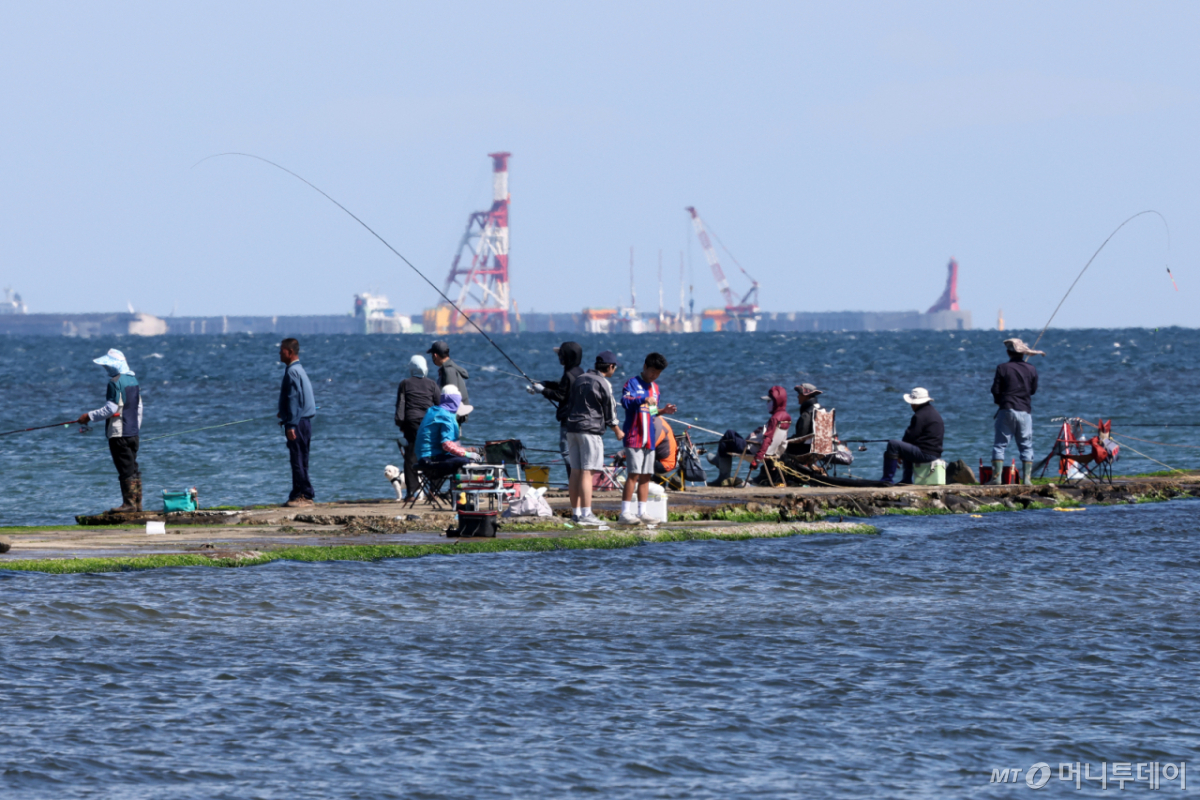
As octopus and cuttlefish reach their peak season, the number of “Gangtaegong” (anglers) heading to the autumn sea has increased. According to the Korea Coast Guard, among an average of 5.05 million fishing boat users annually from 2023 to 2025, 31% (1.57 million people) concentrated in September and October.
However, while indulging in the thrilling “hand feel” of reeling in a catch, it is easy to overlook the strain accumulating on joints and the spine. Repeated motions such as gripping the fishing rod, lifting and lowering the tackle, and winding the reel can put stress on the wrists and elbows. Prolonged stances on a rocking boat, shifting body weight to one side, or moving heavy equipment can also affect the lower back.
Kim Tae-seop (Director), an orthopedic surgeon at Bucheup Himchan Hospital, said, “Although fishing may not appear to involve large movements, the wrists and elbows repeatedly perform actions of gripping and manipulating the rod, while the arms are held up and continuous force is applied to maintain body balance.” He added, “It is also common for people to feel stiff pain after enduring a single posture for a long time while concentrating on watching the fishing float.”
Gripping, winding, and lifting... Strain on wrists, elbows, and shoulders
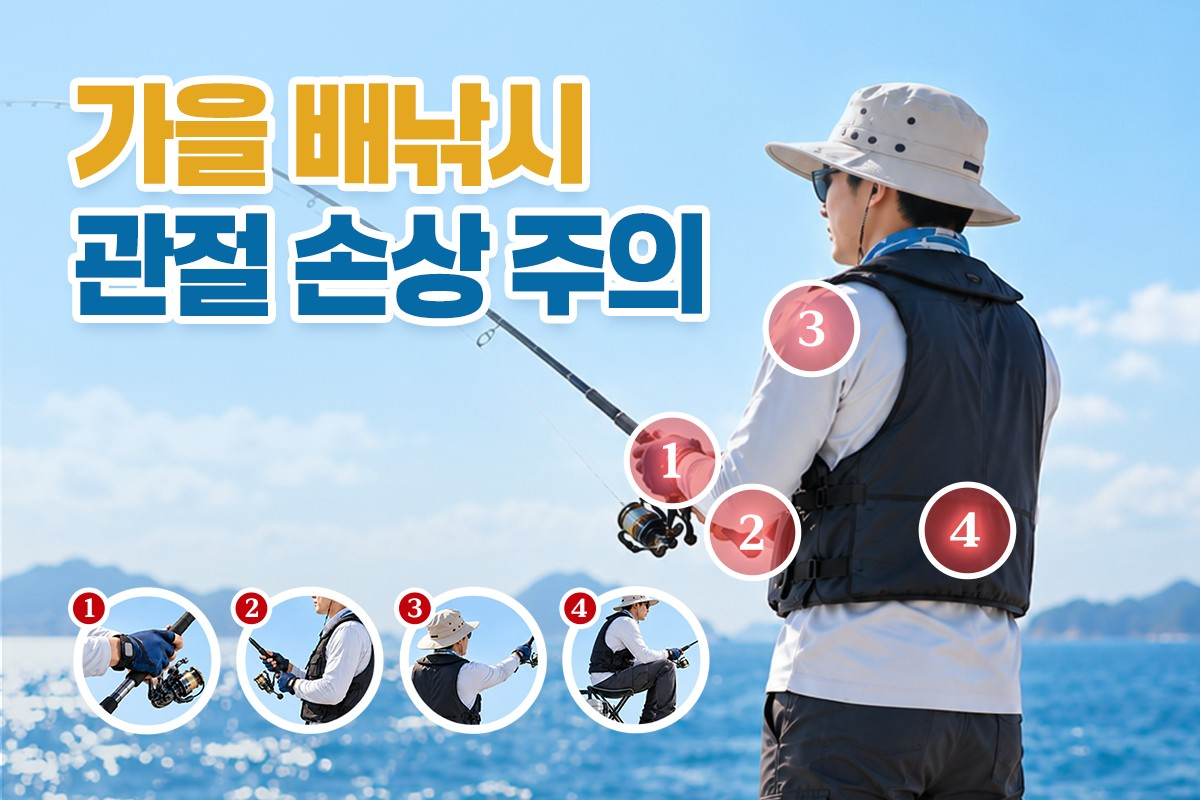
Boat fishing involves repeated motions of gripping the rod and moving it up and down, or winding the reel to retrieve the line. The hand holding the rod must maintain the grip strength on the handle, while the hand winding the reel must stabilize the wrist posture during rotation. In this process, the muscles and tendons of the wrist and forearm are constantly exerting force. In particular, strain can increase if the rod is gripped too tightly or manipulated with the wrist bent at a sharp angle.
The tendons of the muscles that extend and stabilize the wrist attach to the bone on the outside of the elbow, so movements involving the wrist and hand can manifest as elbow pain. If pain on the outer side of the elbow recurs when lifting a cup or gripping objects after fishing, it is necessary to check the condition.
The shoulders bear the added burden of supporting the weight of the arms and the fishing rod. Maintaining a posture with the arms extended far from the body requires shoulder muscles to exert greater force even for the same weight. In this process, as the arms are lifted and the muscles on both sides of the shoulders work harder than usual, abnormalities may develop in the muscles. Repeatedly lifting the arms or holding them up for long periods can accumulate strain on the shoulder tendons, leading to pain or worsening existing symptoms. If the front or outer side of the shoulder hurts when lifting the arm, and the pain persists at night, it is best not to dismiss it as simple muscle fatigue.
Select a lightweight rod and reel within a range suitable for fishing conditions, and use handles that fit the hand well. The likelihood of elbow pain is high if the rod is too heavy or the handle is too thin. Avoid lifting heavy objects with straight elbows; instead, try to use the rod with the palms facing upward as much as possible.
Avoid suddenly jerking with wrist or shoulder strength when the tackle gets snagged. Periodically set the rod down safely and rest the hands and arms by gently extending and flexing the fingers. If pain occurs, reduce gripping, winding, and lifting motions. It is advisable to seek medical treatment if the pain does not subside with rest or recurs during daily activities.
Avoid stretching when the boat rocks violently
While the hands and arms manipulate the rod, the lower back and abdominal muscles maintain body balance on the rocking boat. Shifting weight to one leg and tilting the body, or maintaining a posture of bending and twisting the upper body to look at the water surface for extended periods, can accumulate strain on the muscles and tissues around the lower back. In particular, if one remains focused on fishing without changing posture, fatigue accumulates as the same muscles continue to exert force.
To reduce lower back strain, avoid maintaining a single posture for long periods. It is best to rest in a fixed seat when the boat is stable or change body orientation and posture to reduce the time the lower back muscles remain tense. When organizing tackle, avoid staying bent deeply at the waist toward the floor for extended periods. Avoid stretching that involves twisting the lower back or bending the body significantly while the boat is rocking heavily.
Caution is also required when moving equipment and catch after finishing fishing. Share heavy loads, and when lifting objects, keep them close to the body and bend the knees to reduce strain on the lower back. When changing direction, do not twist only the waist; move the feet to rotate the entire body. Wear non-slip shoes on the deck and do not leave fishing lines or equipment scattered in walkways. Keep one hand free when moving to hold onto fixed railings or handles, and seek crew assistance when boarding or disembarking with heavy loads.
Kim Jung-ho, head of the neurosurgery department at Incheon Himchan General Hospital, said, “If the lower back hurts after fishing, one must examine not only the intensity of the pain but also which areas are painful and whether there are changes in sensation and strength in the legs.” He added, “In particular, if the strength to lift the ankles or toes weakens, do not assume it is simply fatigue from standing for a long time; seek medical attention promptly.”

 in THEBIO

