

The trust fee system in bank-sold ETFs (exchange-traded funds) is expected to be put on the operating table. A new approach is being considered where the back-end load, which favors short-term trading, would be applied as the default, while for longer holding periods, the lower of either the front-end or back-end fee would be charged.
According to financial industry sources on the 23rd, the Financial Supervisory Service (FSS) completed on-site inspections of KB Kookmin Bank, Woori Bank, and NH NongHyup Bank from the 18th to the 21st of this month. The FSS is now launching on-site inspections targeting Shinhan Bank, Hana Bank, and Standard Chartered Bank Korea this week. Next month, a task force (TF) will be established by the FSS to examine whether the current system contains any unreasonable elements based on the inspection results from the banking sector.
The proposed regulatory reform places significant weight on the fee structure. Banks cannot directly trade ETFs like securities firms do and instead sell them in trust form. The fees banks receive from selling ETF trusts amount to 100BP (1BP=0.01 percentage points), which is double that of securities firms.
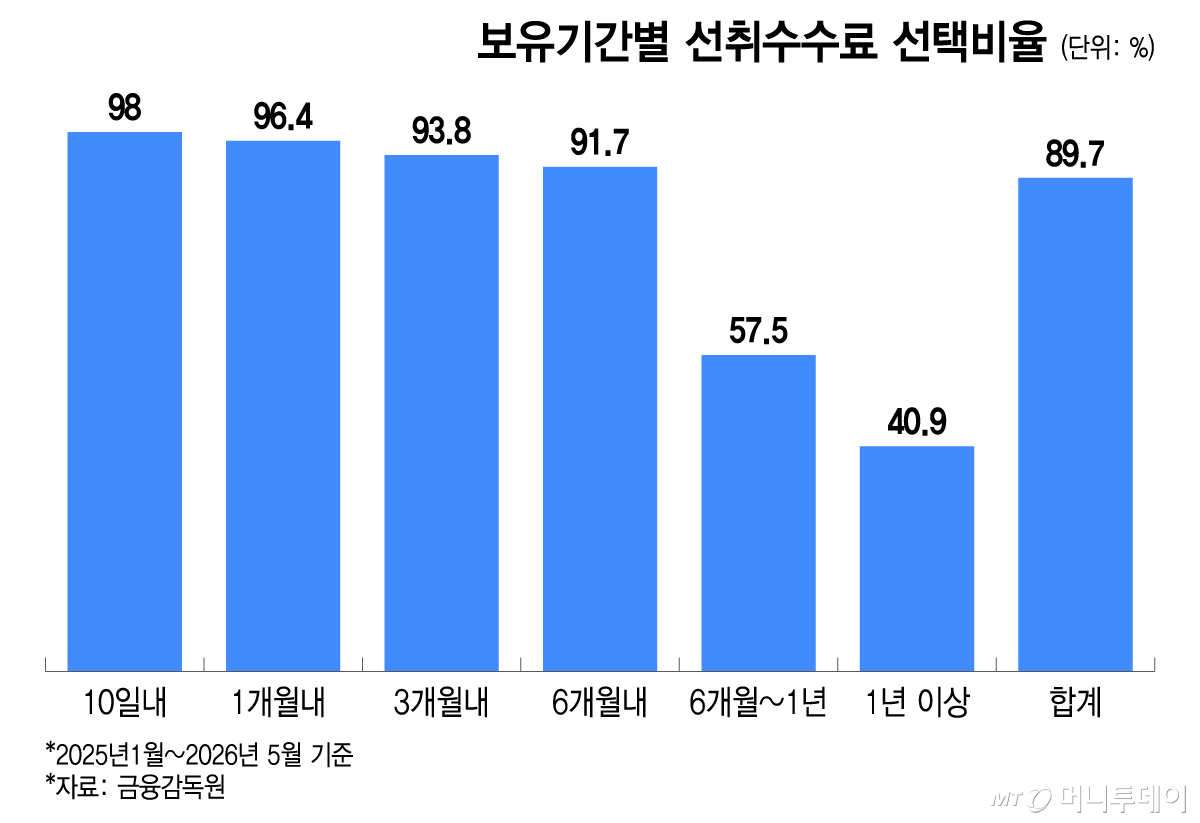
There are two methods for collecting fees: front-end load and back-end load. A front-end load deducts the fee at the time of purchase, while a back-end load is proportional to the holding period and paid on a pro-rata basis upon redemption. Therefore, short-term trading is disadvantaged under the front-end load system. The issue is that with the domestic stock market showing a bull trend in the first half of this year, trading cycles have shortened, yet the proportion of front-end loads has reached 90%. In particular, the shorter the holding period, the higher the proportion choosing the front-end load. According to an FSS investigation of ETF trust products sold from January 2025 to May 2026, 98% of investors who held funds for less than 10 days chose the front-end load.
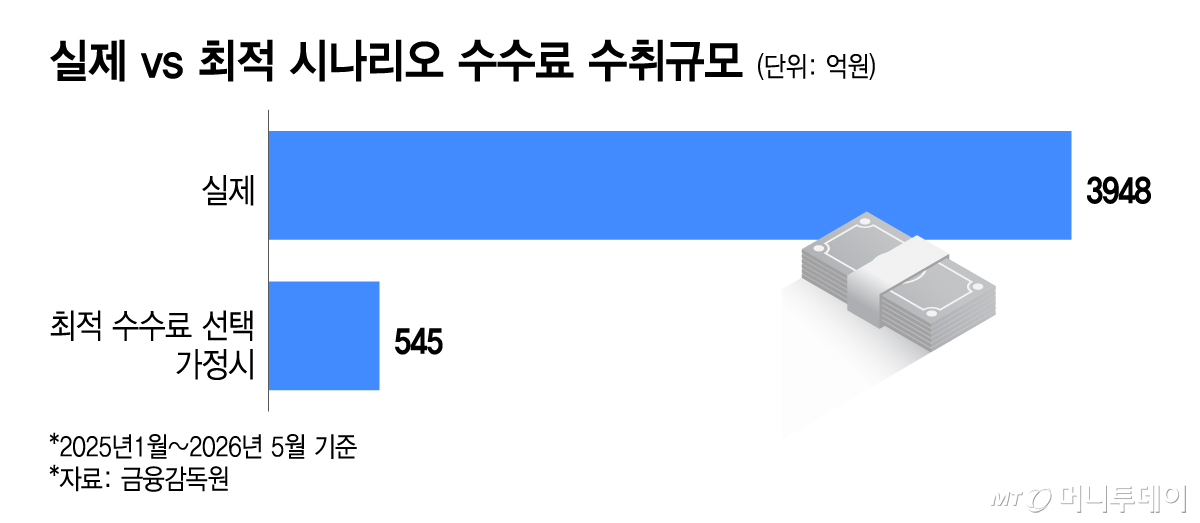
In particular, banks have been criticized for setting target returns around 5%, thereby increasing fee burdens. Currently, major commercial banks manage the balance cap per product between 200 billion won and 500 billion won. There are suspicions that they set low target returns to induce frequent redemptions while managing product balances below limits despite meeting trading demand. The banking sector earned a total of 398.4 billion won in fees from January 1, 2025, to June 5, 2026, which is 7.2 times the amount (54.5 billion won) that would have been collected if customers had chosen the optimal fee structure.
In response, the Financial Supervisory Service is first considering a plan to allow both front-end and back-end load options for all ETF trust products. It is also reviewing measures to provide specific guidance so that customers can choose according to their own investment plans.
Additionally, for short-term trading products, it has been proposed as an improvement to set the back-end option as the default while capping the back-end fee at the level of the front-end fee. In the past during 2021-2022, when domestic and international stock markets showed flat trends, holding periods lengthened, leading to frequent complaints from customers who chose the back-end load system that their fees were excessive. Since the advantages and disadvantages of front-end and back-end loads vary sharply depending on market trends, the intention is to apply the lower of the two fees according to the situation to reduce consumer burdens.
A financial industry official stated, "From a supervisory institutional investor perspective, it would be awkward to suggest cutting fees directly, so we will first review and implement methods that can be reduced independently."

 in FINANCE

