

The U.S. financial market was shaken on the 29th (local time) by the outcome of the second Federal Open Market Committee (FOMC) meeting chaired by Federal Reserve Chair Kevin Wash. Wall Street interpreted this as a sign that trust in Chair Wash has eroded.
On this day, U.S. stocks initially fell amid warnings from President Donald Trump about potential retaliation against Iran's attack and a sharp decline in Korean semiconductor stocks, but attempted to recover in the afternoon. The market maintained its upward trend even after the FOMC's decision to hold interest rates steady was announced at 2 p.m., and expanded its gains when Chair Wash began his press conference at 2:30 p.m.
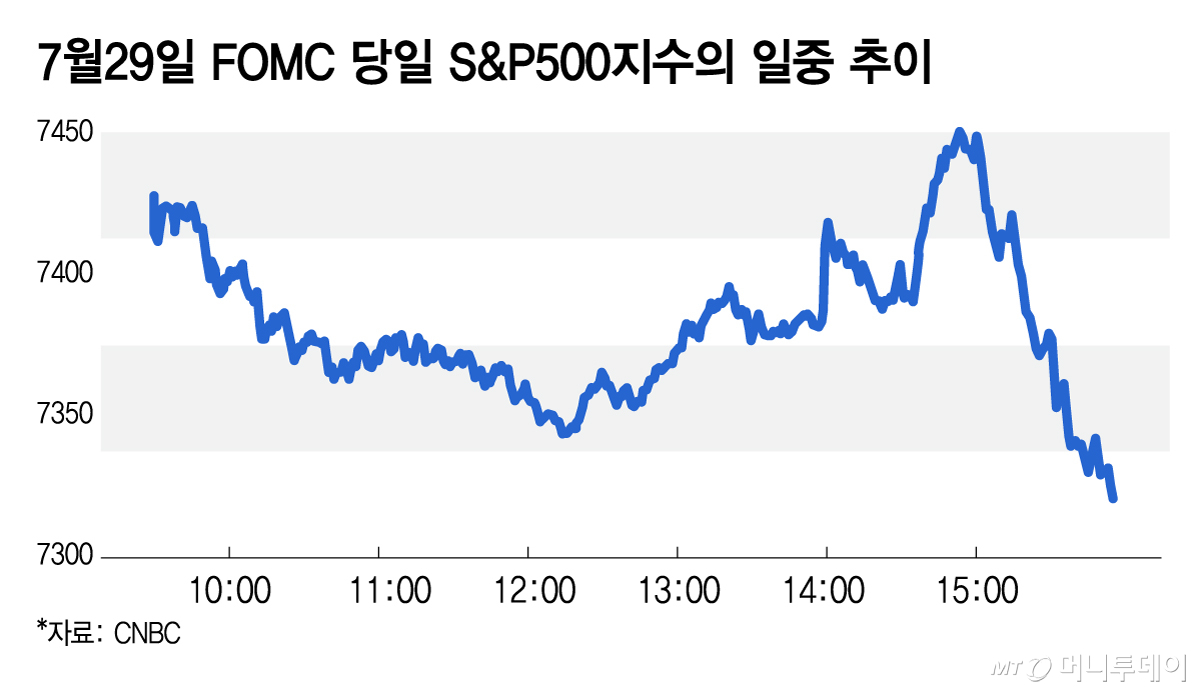
However, starting at 3 p.m., when Chair Wash's press conference was underway, the market reversed direction downward and plummeted sharply. The Dow Jones Industrial Average closed down 2.2%, the S&P 500 index fell 1.5%, and the NASDAQ composite dropped 1.7%. All three major indices recorded their largest declines on the day of an FOMC announcement since December 2024.
The bond market also showed signs of instability. While the yield on the two-year Treasury note, which is most sensitive to Federal Reserve monetary policy, declined, the yield on the 30th-year Treasury note surged sharply. This reflects market concerns that if the Federal Reserve does not easily raise the short-term base rate, it could lead to rising inflation later.
On this day, the 30th-year Treasury yield jumped 0.12 percentage points to 5.21%, reaching its highest level in 19 years since 2007.
The dollar's value fell by 0.5%. Given that the dollar typically strengthens when interest rate hikes are expected, the market judged Chair Wash's press conference as less hawkish than anticipated regarding inflation concerns.
The FOMC statement indicated that three voting members opposed the day's interest rate decision, suggesting the Federal Reserve is sufficiently aware of inflation risks. However, Chair Wash's subsequent remarks during the press conference were assessed as raising doubts about whether he truly intends to raise rates.
Regarding the market's reaction on this day, Mark Cavana, U.S. interest rate Jeon Ryak (Team Lead) at Bank of America, stated that market indicators reflecting expected inflation over the coming years also rose, saying, "This is a typical sign when trust in the central bank is shaken."
The Wall Street Journal (WSJ) identified three key remarks by Chair Wash as reasons why the market grew suspicious of his actual intent to raise rates despite emphasizing price stability.
First, he made comments suggesting he views inflation from a broad perspective. When asked which price index the Federal Reserve prioritizes most, Chair Wash confirmed it is the Personal Consumption Expenditures (PCE) price index, the Fed's official inflation gauge.
However, he added that he looks at inflation from an even broader perspective than the PCE index alone. This was interpreted as meaning the Federal Reserve would make discretionary monetary policy decisions by considering other price indices and economic conditions, even if the PCE index shows a wider increase.
Chair Wash has long argued that current price indicators, including the PCE index, have limitations in capturing actual inflation trends since before his appointment as Federal Reserve Chair. He is currently operating an inflation framework task force (TF) to review the price indices that serve as the basis for current policy.
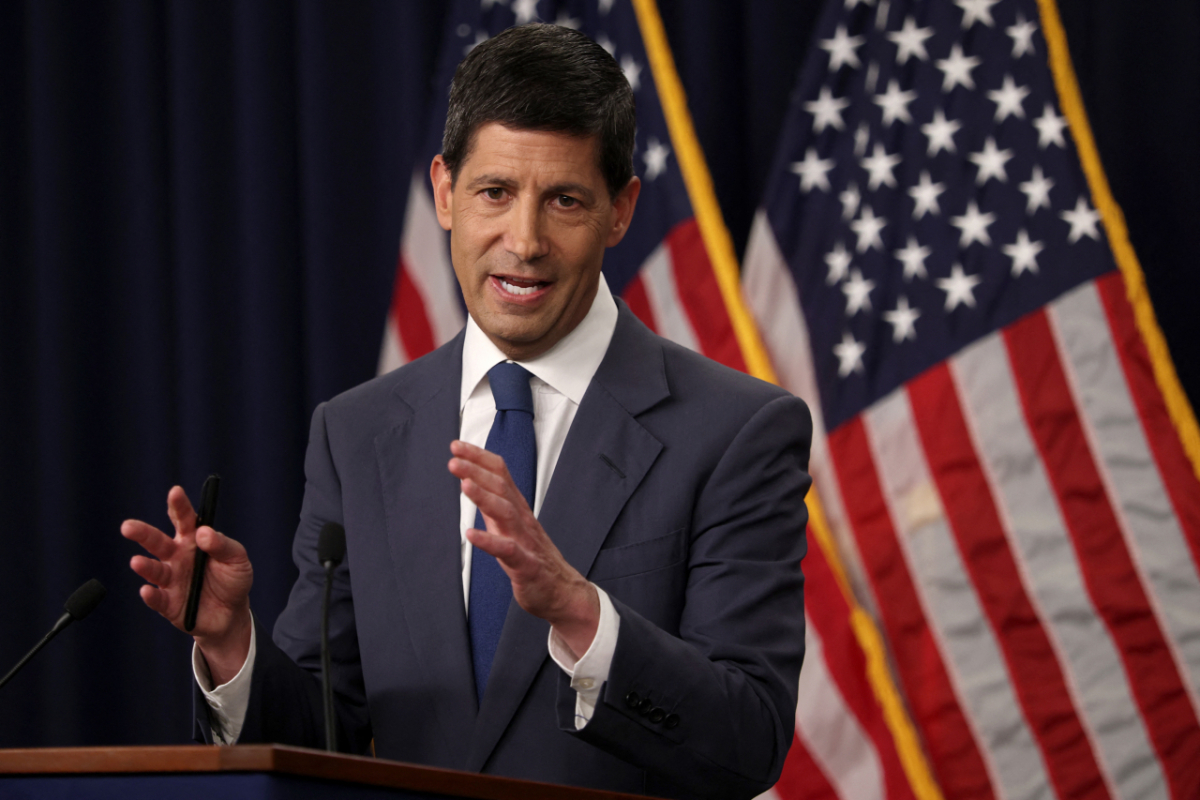
Second, when asked whether raising interest rates would be a solution if inflation does not easily decline, he responded that it "could certainly be part of the solution." The market focused on the fact that Chair Wash did not explicitly state that rate hikes are the most core solution to inflation.
Third, he noted that since the first FOMC meeting he chaired in June, Treasury yields have risen significantly, and the increase in market rates has partially replaced the role of raising the Federal Reserve's base rate by triggering tightening effects.
When reporters asked why Chair Wash had not translated his promise to curb inflation into action by raising rates, he explained that rising market rates have increased borrowing costs, thereby partially substituting for the need to raise the Federal Reserve's base rate.
Jose Torres, chief economist at Interactive Brokers, stated, "Chair Wash is far behind the market," pointing out concerns that the Federal Reserve may not respond quickly and strongly enough to curb inflation this time as it did in 2022. He added, "He knows inflation is a problem but refuses to raise rates."
Neil Dutta, an economist at Renaissance Macro, criticized Chair Wash on social media platform X, saying, "I don't believe raising rates builds trust; rather, I think it should be raised because it's necessary. However, instead of raising rates to build trust, he chose to watch and think, missing the opportunity to build trust by holding rates steady."
He continued, "If he doesn't want to talk about (the future monetary policy path), he should either show action or remain silent—but he did neither. This is why the 30th-year Treasury yield surged." Dutta has long argued alongside firms like Citadel Securities that the Federal Reserve should have raised rates at this FOMC meeting.
Krishna Guha, global policy and central bank Jeon Ryak (Team Lead) at Evercore ISI, stated that while he generally expects Chair Wash to avoid raising rates at the September FOMC meeting, such a decision would be precarious, akin to walking on a razor's edge.
If inflation continues to stagnate throughout this summer due to the Iran war and rising energy prices, Chair Wash will face scrutiny over his previously firm statements on price stability. He could confront pressure from up to six of the 12th FOMC voting members Ban (CEO) and the bond market, ultimately forcing him to choose between raising rates or losing market trust.
Moving forward, key watchpoints regarding Federal Reserve monetary policy decisions will include oil price movements related to the Iran war, inflation trends, and long-term Treasury yield dynamics. If long-term yields remain at high levels, it will serve as a warning signal that market distrust in the Federal Reserve's ability to control inflation persists.
Meanwhile, on the 30th, at 8:30 a.m. (9:30 p.m. Korean time), the June data for the PCE price index—the official inflation gauge recognized by the Federal Reserve—will be released. In June, as the U.S. and Iran conducted peace negotiations and oil prices stabilized, PCE inflation is expected to have slowed slightly compared to the previous month (May).
At the same time, a preliminary report on second-quarter gross domestic product (GDP) growth will also be released. As this marks the first public release of Q2 economic growth data, investor interest is high. After market close, Apple and Amazon will announce their earnings results.

 in STOCK

